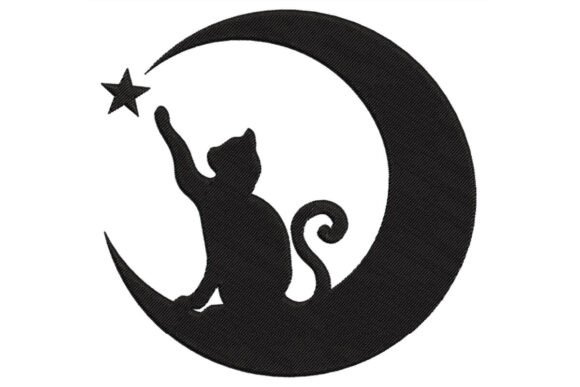
Black Cat on Moon Embroidery Review
A Moody, Memorable Silhouette That Stitches With Purpose
As an embroidery designer who’s stitched thousands of motifs for Etsy shops, boutique apparel lines, and seasonal handmade gifts, I approached Black Cat on Moon with a mix of curiosity and caution. It’s not just another cat motif—it carries atmosphere: a sleek feline arching beneath a crescent moon, rendered in clean, confident lines. The visual mood is quietly magical—not cutesy, not spooky, but timeless. That balance matters when you’re building brand consistency across tote bags, nursery decor, or limited-edition sweatshirts. What stood out immediately was its intentional simplicity: no excessive detail, no fragile tendrils or micro-stitching. Instead, it leans into strong satin stitch outlines and smooth fill stitch areas—giving it presence without overburdening the hoop or thread.
Real-World Stitching: Where It Shines (and Where to Pause)
I tested Black Cat on Moon across five real project types: a cotton twill apron, a 100% cotton baby blanket, a medium-weight unstructured cap, a linen kitchen towel, and a polyester blend pillow cover. On stable fabrics like twill and quilting cotton, it stitched flawlessly—even at smaller hoop sizes (4” x 4”). The design’s compact footprint means it fits comfortably inside standard hoops without scaling or distortion. On the cap, I used a medium cutaway stabilizer and slowed my machine speed slightly; the curve didn’t compromise legibility, and the moon’s gentle arc remained crisp.
Where attention is needed: stretchy knits (like lightweight t-shirts) require a light tear-away + cutaway combo, and I recommend testing thread color contrast first—especially on dark fabric. A matte black thread on navy felt flat until I swapped to a soft charcoal with subtle sheen. Also, while the design avoids tiny lettering or micro-details, the cat’s tail tip and moon’s inner curve are narrow fill areas. On dense weaves or textured fabrics (like terry cloth towels), those sections benefit from a light topping stabilizer to prevent skipped stitches.
Commercial Use: From Etsy Listings to Boutique Merchandise
If you sell handmade products—or plan to—I’ve found Black Cat on Moon adds quiet authority to listings. It reads as intentional, not generic. On a cream-colored organic cotton tote bag, it elevated the whole presentation: customers commented on “the elegance” and “how well it photographs.” That’s critical for digital storefronts. For Etsy sellers, pairing this design with a printable mockup (say, on a vintage-style sweatshirt or minimalist pillow cover) creates cohesive, scroll-stopping visuals—no custom illustration needed.
It also works exceptionally well as an embroidered patch. When stitched onto twill and heat-sealed to denim jackets or canvas backpacks, the satin stitch edges hold up beautifully after repeated washing. As a nursery decor piece on a muslin baby blanket, it felt soothing rather than whimsical—a subtle nod to bedtime stories and quiet magic. That versatility makes it a smart addition to design assets for small business owners juggling multiple product lines.
What This Design Does for Your Finished Product
- Boosts perceived value: Its balanced composition and restrained detail signal craftsmanship—not mass production.
- Strengthens buyer trust: Customers recognize when a motif is thoughtfully digitized for real-world wear, not just screen display.
- Supports brand consistency: Whether you’re selling celestial-themed goods or modern cottagecore apparel, Black Cat on Moon adapts without diluting your voice.
- Enhances giftability: Paired with thoughtful packaging (a moon-shaped gift tag, maybe), it becomes a personalized gift that feels curated—not assembled.
- Improves product photography: Its high-contrast silhouette pops against neutral backdrops and translates well to Instagram reels or Pinterest pins.
Practical Notes Before You Stitch
Before committing to a customer order or bulk run, take these steps:
- Test on scrap fabric—especially if using non-standard materials like velvet, cork-backed coasters, or recycled denim.
- Review stitch density in your embroidery software. If layers feel overly dense for lightweight fabric, consider reducing fill underlay or adjusting stitch angle.
- Confirm hoop size requirements on the Creative Fabrica product page—don’t assume compatibility with your smallest hoop.
- Compare light vs. dark fabric mockups in your design software to preview thread color impact before cutting thread.
- Use appropriate stabilizer: cutaway for knits and caps, tear-away for stable wovens, and fusible + topping for napped or textured surfaces.
- Inspect small details post-stitch: the moon’s curve and cat’s ear tips should be fully formed—not frayed or thin. If they’re not, revisit stabilizer choice or thread tension.
- Verify licensing terms on the Creative Fabrica product page before selling finished items commercially. Some Creative Fabrica embroidery files allow unlimited physical use but restrict resale of the digital file itself.
Final Thoughts for Crafters and Creative Entrepreneurs
Black Cat on Moon isn’t flashy—but it’s dependable. It doesn’t shout. It lingers. That makes it ideal for makers who value subtlety, longevity, and quiet storytelling in their handmade product. It performs well across categories: sweatshirt embroidery, embroidered patch production, custom apparel for local boutiques, seasonal handmade gifts, and even digital embroidery file bundles for fellow designers. Unlike trend-driven motifs that fade after one season, this one has staying power—both visually and technically.
If you’re curating design assets for commercial embroidery or building a cohesive collection of Cats-themed embroidery files, Black Cat on Moon earns its place—not as filler, but as foundation. It reminds us that sometimes the most effective machine embroidery design is the one that stitches cleanly, photographs beautifully, and invites a second look long after the hoop comes off.